Prepare for CTET & State TET
with EduRev
CTET & State TET syllabus



All Courses for CTET & State TET


CTET (Central Teacher Eligibility Test) Mock Test Series 2026
Child Development and Pedagogy for CTET Preparation
How To Study For CTET
CTET Previous Year Question Papers
Science & Pedagogy Paper 2 for CTET & TET Exams
Social Studies & Pedagogy Paper 2 for CTET & TET Exams
Mathematics & Pedagogy Paper 2 for CTET & TET Exams
NCERT Textbooks (Class 6 to Class 12)
English Language & Pedagogy for CTET & TET Exams
2 Months Preparation for CTET Paper 2
Mindmaps for CTET
EVS & Pedagogy Paper 1 for CTET & TET Exams
English Grammar Basic
PPTs for CTET
CTET Mock Test Series (Hindi) 2026
Study Plan for CTET
NCERT Video Summary: Class 6 to Class 12 (English)
English Grammar Advanced
Mathematics & Pedagogy Paper 1 for CTET & TET Exams
Flashcards for CTET
बाल विकास और शिक्षाशास्त्र (CDP) के लिए तैयारी (CTET Preparation)
Hindi Language & Pedagogy
Crash Course for CTET Preparation (English)
General English for Secondary Classes
गणित और शिक्षाशास्त्र (Mathematics) CTET & TET Paper 2
2 Months Preparation for CTET Paper 1
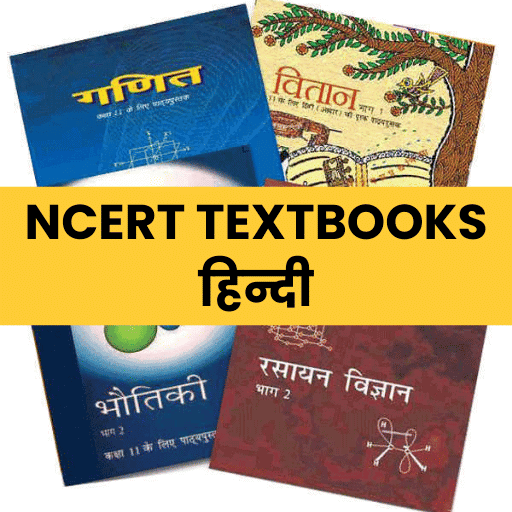
NCERT Textbooks in Hindi (Class 6 to Class 12)
विज्ञान और शिक्षाशास्त्र (Science) CTET & TET Paper 2
Crash Course for CTET Preparation (Hinglish)
Improve Your Calculations: Vedic Maths (English)
Sainik School PRT Mock Test Series
सामाजिक अध्ययन और शिक्षाशास्त्र (SST) CTET & TET Paper 2
Audio Notes for बाल विकास और शिक्षाशास्त्र (CDP)
NCERT Video Summary: Class 6 to Class 12 (Hindi)
Spoken English in 30 Days
पर्यावरण अध्ययन और शिक्षाशास्त्र (EVS) CTET & TET Paper 1
Sainik School PGT Mock Test Series
गणित और शिक्षाशास्त्र (Mathematics) CTET & TET Paper 1
CTET के लिए कैसे अध्ययन करें ?
Weekly Tests for CTET Preparation
Sainik School Medical Officer Mock Test Series
Sainik School LDC Mock Test Series
Sainik School TGT Mock Test Series







Mock Test & Practice for CTET & State TET
Main Subjects for CTET & State TET
Child Development and Pedagogy for CTET Preparation
Science & Pedagogy Paper 2 for CTET & TET Exams
Social Studies & Pedagogy Paper 2 for CTET & TET Exams
Mathematics & Pedagogy Paper 2 for CTET & TET Exams
English Language & Pedagogy for CTET & TET Exams
EVS & Pedagogy Paper 1 for CTET & TET Exams
English Grammar Basic
English Grammar Advanced
Mathematics & Pedagogy Paper 1 for CTET & TET Exams
Hindi Language & Pedagogy
General English for Secondary Classes
Guided Learning for CTET & State TET
Revision for CTET & State TET
Video Lectures for CTET & State TET















What is CTET and Why is It a Must-Have Qualification for Teachers in India?
The Central Teacher Eligibility Test (CTET) is a national-level examination conducted by the Central Board of Secondary Education (CBSE) on behalf of the Ministry of Education, Government of India. It certifies candidates as eligible to teach in central government schools such as Kendriya Vidyalayas (KVS) and Navodaya Vidyalayas (NVS).
One of the most significant updates in recent years is that the CTET qualifying certificate is now valid for a lifetime, following the NCTE decision in 2021. This means lakhs of aspiring teachers no longer need to worry about recertification. Since 2021, CTET is also conducted as a fully online Computer-Based Test (CBT), typically twice a year.
Who Should Appear for CTET?
- Paper 1 - For candidates wishing to teach Classes 1 to 5 (Primary Level)
- Paper 2 - For candidates wishing to teach Classes 6 to 8 (Upper Primary Level)
- Candidates targeting both levels must appear for both papers
Before you begin preparing, it is important to go through the CTET Syllabus 2026: Complete Paper 1 & Paper 2 Subject-wise Guide to understand exactly what topics are covered across both papers. Whether you are a fresh graduate or a working professional, earning a CTET certificate significantly strengthens your profile for government teaching positions across India.
How to Prepare for CTET: A Complete Step-by-Step Strategy for Beginners and Repeaters
CTET preparation requires a structured approach, whether you are appearing for the first time or are a repeater looking to improve your score. The key is to start with a clear understanding of each section and build your preparation systematically.
A practical Study Plan for CTET on EduRev helps you map out your daily and weekly goals effectively. For those who need a structured crash programme, the Crash Course for CTET Preparation (English) is an excellent starting point.
Key Preparation Tips
- Begin with Child Development and Pedagogy - it is common to both papers and carries high weightage
- Follow NCERT textbooks for content-based sections
- Solve previous year question papers regularly
- Take full-length mock tests in CBT mode to simulate the actual exam environment
- Dedicate focused time to language pedagogy, which is distinct from general grammar
If you want a detailed breakdown of how to study efficiently, explore the How To Study For CTET course on EduRev for expert-curated guidance. You can also check the CTET Exam Pattern 2026: Paper 1 & Paper 2 Structure, Marks & Duration to understand the marking scheme before you plan your preparation.
Child Development and Pedagogy for CTET: Key Concepts Every Aspirant Must Know
Child Development and Pedagogy (CDP) is a compulsory subject in both Paper 1 and Paper 2, making it one of the most important sections for CTET exam preparation. A strong grip on CDP can significantly boost your overall score. For a topic-by-topic breakdown of what's tested, refer to the CTET CDP Syllabus 2026: Child Development & Pedagogy Complete Topics.
| Key Theorist | Concept |
|---|---|
| Jean Piaget | Stages of Cognitive Development |
| Lev Vygotsky | Zone of Proximal Development (ZPD) |
| Lawrence Kohlberg | Stages of Moral Development |
CDP also covers inclusive education, learning and cognition, assessment, and special needs education. These topics appear repeatedly across sessions. The Child Development and Pedagogy for CTET Preparation course on EduRev provides comprehensive notes and practice questions aligned with current exam trends. You can also download the Important Notes for Child Development and Pedagogy for a concise, exam-focused revision resource.
To revise quickly before the exam, the Mindmaps for CTET and Flashcards for CTET resources are particularly useful for retaining CDP concepts.
Best Books and Study Material for CTET Paper 1 and Paper 2 Preparation
Choosing the right CTET study material is half the battle won. For content-based sections, NCERT textbooks remain the gold standard. For pedagogy sections, subject-specific courses covering teaching methodology are essential.
Here is a subject-wise breakdown of recommended resources available on EduRev:
- EVS & Pedagogy Paper 1 for CTET & TET Exams - critical for Paper 1 aspirants
- Mathematics & Pedagogy Paper 1 for CTET & TET Exams - covers both content and pedagogy
- English Language & Pedagogy for CTET & TET Exams - focuses on language acquisition and teaching methods
- Hindi Language & Pedagogy - essential for Hindi medium and bilingual aspirants
For grammar support, EduRev offers both English Grammar Basic and English Grammar Advanced courses to strengthen your language section performance.
How to Crack CTET in 2 Months: A Realistic and Effective Study Plan
Cracking CTET in 2 months is absolutely achievable with the right prioritisation. Many successful candidates have cleared the exam in their first attempt using focused, disciplined preparation.
EduRev's dedicated programmes - 2 Months Preparation for CTET Paper 1 and 2 Months Preparation for CTET Paper 2 - are structured week-by-week to help you cover the entire syllabus without panic.
Recommended Weekly Priority
- Weeks 1-2: CDP theory, key theorists, and inclusive education
- Weeks 3-4: Subject-specific pedagogy (EVS/Maths for Paper 1; Science/Social Studies for Paper 2)
- Weeks 5-6: NCERT content revision (Classes 6-12 for Paper 2)
- Weeks 7-8: Previous year papers, mock tests, and revision using flashcards
CTET Previous Year Question Papers: The Smartest Way to Boost Your Score
Solving CTET previous year question papers is one of the most reliable preparation strategies recommended by toppers and educators alike. These papers reveal recurring topic patterns, difficulty levels, and the type of application-based questions that CBSE favours.
Access a well-organised collection through the CTET Previous Year Question Papers course on EduRev, which includes solutions and detailed explanations to help you understand where you went wrong. For paper-specific practice, you can directly access CTET Paper 1 Previous Year Questions with Solutions and CTET Paper 2 Previous Year Questions with Solutions.
How to Use Previous Year Papers Effectively
- Attempt papers under timed, exam-like conditions
- Identify weak areas and revisit relevant study material
- Track your improvement across multiple sessions
- Note topic repetition to prioritise high-yield areas
Subject-Wise Preparation Guide for CTET Paper 2 (Science, Mathematics, and Social Studies)
Paper 2 demands deeper subject knowledge along with strong pedagogy understanding. Aspirants must choose between Mathematics & Science or Social Studies as their specialisation.
| Subject | EduRev Resource |
|---|---|
| Mathematics & Pedagogy | Mathematics & Pedagogy Paper 2 for CTET & TET Exams |
| Science & Pedagogy | Science & Pedagogy Paper 2 for CTET & TET Exams |
| Social Studies & Pedagogy | Social Studies & Pedagogy Paper 2 for CTET & TET Exams |
Each of these courses integrates content knowledge with teaching methodology, ensuring you are prepared for both the conceptual and pedagogical aspects of Paper 2.
Why NCERT Books Are the Backbone of CTET and State TET Preparation
NCERT textbooks from Classes 6 to 12 form the primary content source for Paper 2 subjects, while Classes 1 to 5 are important for Paper 1. No CTET preparation is complete without thorough NCERT revision.
EduRev provides easy access to the complete NCERT Textbooks (Class 6 to Class 12) in one place. For faster revision, the NCERT Video Summary: Class 6 to Class 12 (English) course offers concise video-based summaries - ideal for aspirants with limited time.
Rather than reading entire chapters, focus on key concepts, definitions, and examples from NCERT that are frequently tested in CTET across multiple years.
CTET Mock Test Series: How Regular Practice Tests Lead to Higher Scores
Since CTET is now a Computer-Based Test, taking online mock tests is not optional - it is essential. Regular practice through a quality CTET mock test series helps with time management, screen-based reading, and building exam temperament.
EduRev offers the CTET Mock Test Series 2026 with full-length tests designed to mirror the actual CBT experience. Hindi medium aspirants can benefit from the CTET Mock Test Series (Hindi) 2026, which provides the same rigorous practice in Hindi. In the final days before your exam, the CTET Cheat Sheet for Quick Revision is a handy resource to consolidate key facts across all sections rapidly.
Attempt at least one full mock test per week in the final month, analyse your performance, and revisit weak areas before your next attempt.
CTET vs State TET: What's the Difference and How to Prepare for Both Together
A common question among teaching aspirants is whether CTET and State TET preparation can be done simultaneously. The answer is yes - with smart planning, you can prepare for both together. For a thorough comparison of all teacher eligibility tests, read CTET vs TET vs STET: Key Differences, Validity & Which to Attempt.
Key Differences at a Glance
- CTET is conducted by CBSE and qualifies candidates for central government schools (KVS, NVS)
- State TETs (UPTET, REET, HTET, MAHA-TET, TNTET, etc.) are conducted by respective state governments for state school appointments
- A CTET certificate does not substitute a State TET certificate - both are independently required
- Most State TETs mirror CTET's structure, making combined preparation highly efficient
The subject-wise pedagogy courses on EduRev - covering Mathematics, Science, Social Studies, English, Hindi, and EVS - are equally relevant for State TET preparation. The overlapping syllabus means your CTET preparation directly strengthens your State TET performance as well.
Start your preparation today with a clear plan, the right resources on EduRev, and consistent practice - and you will be well on your way to securing your teaching career in 2026.
CTET & State TET FAQs
| 1. How many attempts are allowed for CTET, and is there any age limit to keep appearing? |  |
| 2. What is the difference between Paper 1 and Paper 2 in CTET? | |
| 3. Is CTET certificate valid for lifetime now, or does it still expire? | |
| 4. What is the passing marks for CTET for general category and OBC or SC candidates? | |
| 5. How is the CTET exam different from state TET exams like UPTET or HTET? | |
| 6. What subjects are asked in CTET Paper 1 and how should I divide my study time? | |
| 7. What are the best free resources to practise CTET mock tests and previous year papers? | |
| 8. How do I start preparing for CTET from scratch if I have never studied education or pedagogy before? | |
| 9. Does qualifying CTET guarantee a government teaching job? | |
| 10. What is the syllabus pattern for state TET exams and is it the same as CTET? | |
| 11. How much time does it realistically take to prepare for CTET if I study two hours a day? | |
| 12. What is Child Development and Pedagogy in CTET and why does everyone say it is the most important section? | |
| 13. Can I appear in both CTET and my state TET in the same year? | |
| 14. What happens if I fail CTET - is there a waiting period before I can reappear? | |
| 15. What are the most scoring topics in CTET Paper 2 for the Maths and Science stream? | |